How can we better treat patients with medically refractory, life-threatening arrhythmias?
Some research feels incremental - and then there is the kind that quietly redraws the map. At the Westmead Health Precinct and University of Sydney (Westmead Applied Research Centre), a truly multidisciplinary team is working across boundaries that do not often meet in the same room - radiation oncologists, cardiac electrophysiologists, cardiologists, radiation therapists, engineers and basic scientists - united by a single question: How can we better treat patients with medically refractory, life-threatening arrhythmias? Out Westmead Cell Imaging Facility, led by Hui Zhang and with Specialist Hong Yu, have supported this work with our Stellaris 5 Confocal Microscope.
This program is advancing cardiac stereotactic body radiation therapy (SBRT), a precise, non-invasive modality that has demonstrated substantial reductions in ventricular tachycardia burden. For patients who have exhausted conventional therapies, that possibility matters.
But before a therapy becomes standard of care, it must be understood – not just observed. To refine and optimise cardiac SBRT, the team is using iPSC-derived cardiomyocytes as a controlled human cellular model to investigate how radiation interacts with heart cells. They are examining:
• Electrophysiological effects
• Molecular signalling pathways
• Structural remodelling
• Cell survival
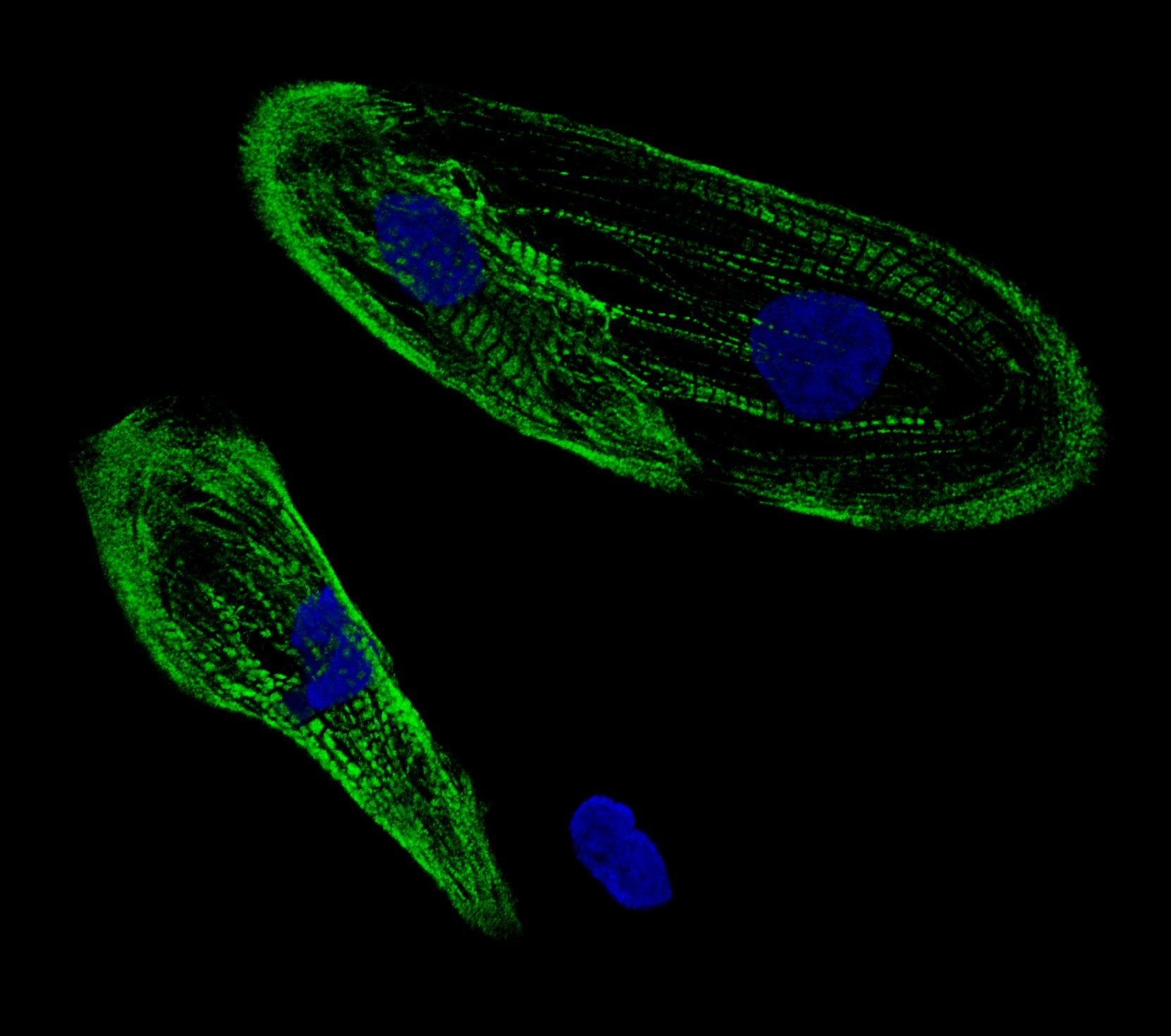
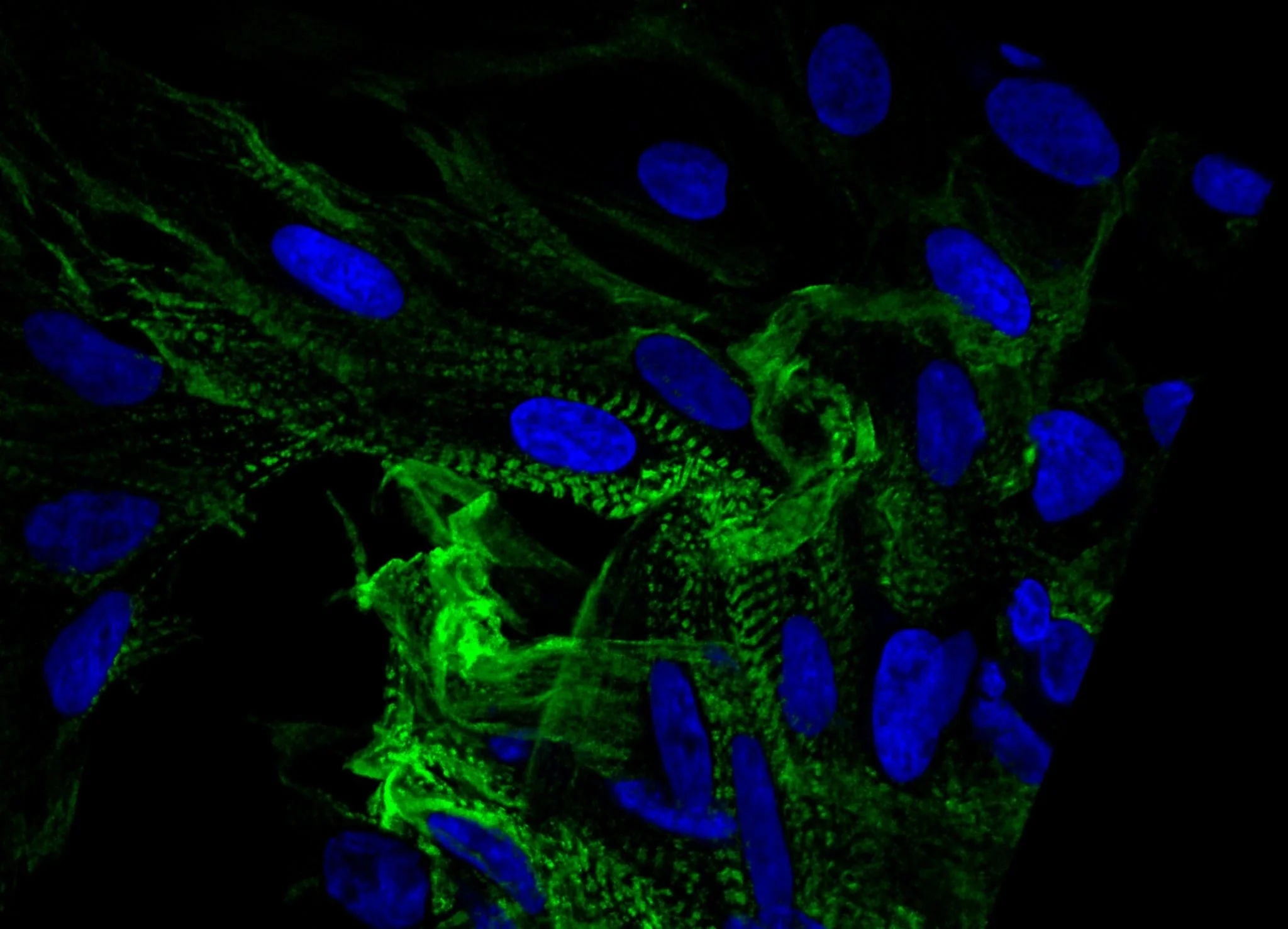
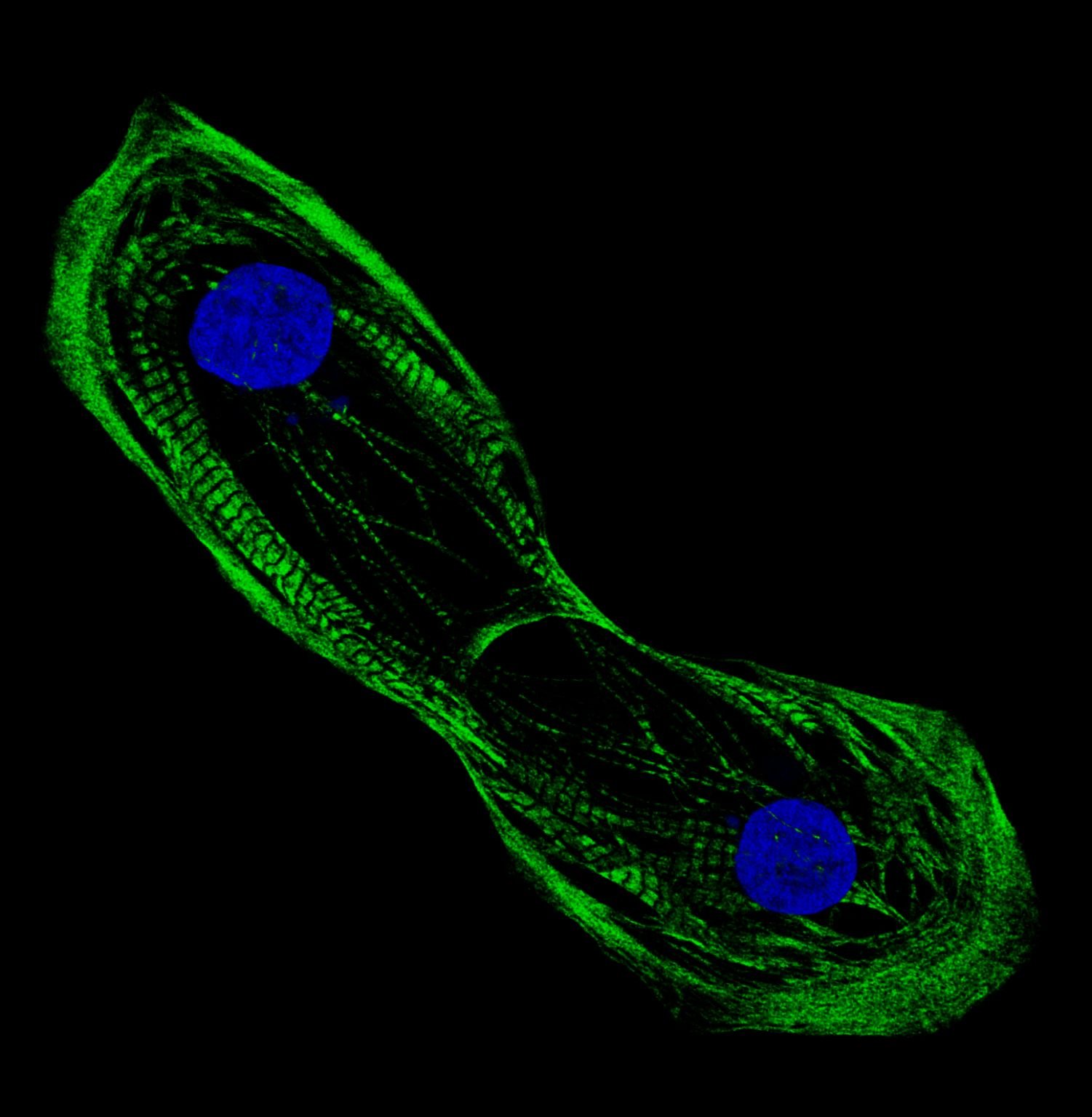
These mechanistic insights inform dosing strategies and help ensure that efficacy does not come at the expense of safety. The images shown here, captured by Dr Poornima Balaji, captures iPSC-derived cardiomyocytes following radiation treatment. Cells are stained for cardiac troponin (green) and DAPI (blue). Preserved troponin expression and intact nuclear staining indicate that, under these experimental conditions, radiation does not adversely affect cell viability.
This is what a true bench-to-bedside pipeline looks like. Laboratory discovery directly informing an active cardiac SBRT clinical program at Westmead Hospital. Questions arising in the clinic shaping experiments at the bench. A continuous feedback loop rather than a linear handover.
When disciplines converge around a shared clinical problem, innovation accelerates - and sometimes, a non-invasive beam of radiation may offer hope where options once felt limited.