
PrecisionGo
End-to-End Pipelines
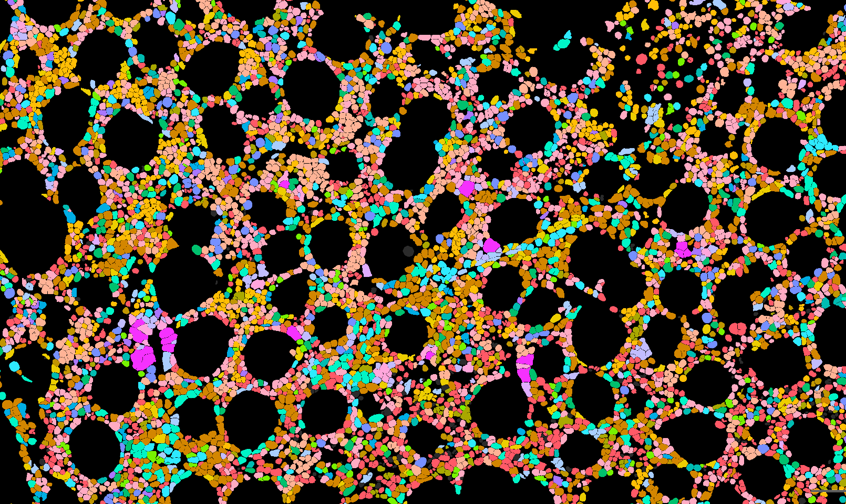
Spatial map of a bone marrow trephine biopsy from a human donor. Image courtesy of A/Prof. Joanne Reed and Dr. Huyen Phan from the Autoimmunity and Amyloidosis Lab at the Westmead Institute for Medical Research.
Recent advancements in genomic profiling technologies, cell imaging and cytometry have accelerated biomarker discovery, enabling improvements in disease detection and monitoring, prediction of disease outcomes and treatment responses and understanding of pathogenic mechanisms that are key to developing novel innovative therapies.
Through PrecisionGo, academic, clinical and industry researchers will have access to over 100 technologies and a range of established and bespoke sample preparation, data analysis and sample management services through integrated and customizable pipelines. From sample to insight, our end-to-end pipelines are designed to be fit-for-purpose to each project and streamlines complexity that is inherent with using advanced technologies or novel methodologies that often require a multidisciplinary approach. These are some of our available pipelines. Contact us at precisiongo@wimr.org.au to find out more about how our technologies and capabilities can help in your project.
Whole Transcriptome Spatial Transcriptomics Pipeline
Inclusions:
Tissue/TMA assessment and selection
Slide preparation and sectioning from FFPE or fresh frozen blocks
HE or IF staining with high resolution imaging
Visium HD whole transcriptome workflow with CytAssist system
Library preparation and sequencing
Data cleaning, transformation and quality checks
Data normalisation and clustering
Data integration
Data annotation
Differential expression
Spatial analysis
Visualisation support
Combine genomic profiling, histology and high-resolution imaging to generate tissue atlases. Functionally characterize tissue architecture, sub-type tissue and explore spatial gene expression signatures at single cell scale resolution with Visium HD technology.
It's suited to questions where tissue architecture matters: mapping how expression and cell populations are organised across regions, and how that organisation and transcriptomic signatures shift between healthy and diseased states.
Best for: Unbiased whole transcriptome tissue mapping and biomarker discovery project
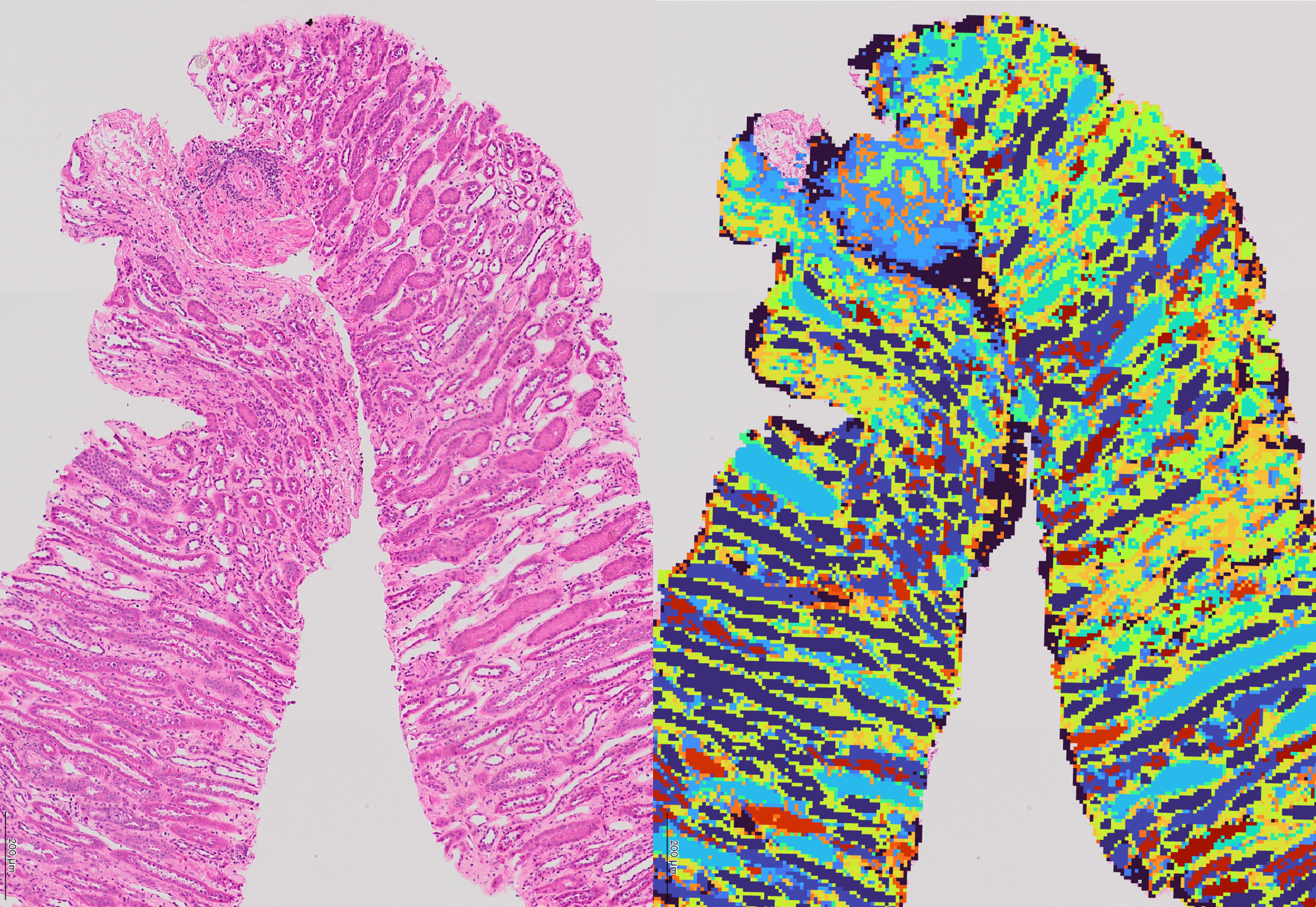
Whole transcriptome spatial analysis of a biopsy from a transplanted kidney. Image courtesy of Dr Jennifer Li and Sherry Ding, Centre for Transplantation and Renal Research, WIMR
Targeted Spatial Transcriptomics Pipeline
Perform tissue-wide spatial analyses at single and subcellular resolution with focused gene panels. Correlate tissue architecture, gene expression mapping and functional signatures to track how individual cells interact, communicate and influence disease and treatment responses.
It's strongest where single-cell spatial precision is the goal: resolving individual cell types in situ and quantifying how they associate, colocalise, and influence one another within intact tissue.
Best for: Hypothesis driven spatial analyses with gene panels, investigating cell interactions, neighbourhoods and tissue microenvironments, biomarker discovery and validation.
Inclusions:
Tissue/TMA assessment and selection
Slide preparation and sectioning from FFPE or fresh frozen blocks
Xenium workflow with pre-designed human/mouse gene panels (up to 5,000 genes), full custom gene panels (up to 1,000 genes) and human protein panels (up to 28 proteins).
Additional custom gene detection (up to 100 genes on top of pre-designed panels)
Post-Xenium multiomic applications (HE and multiplex IF)
Data cleaning, transformation and quality checks
Data segmentation
Cell annotation
Spatial analysis of cellular neighbourhoods and interactions
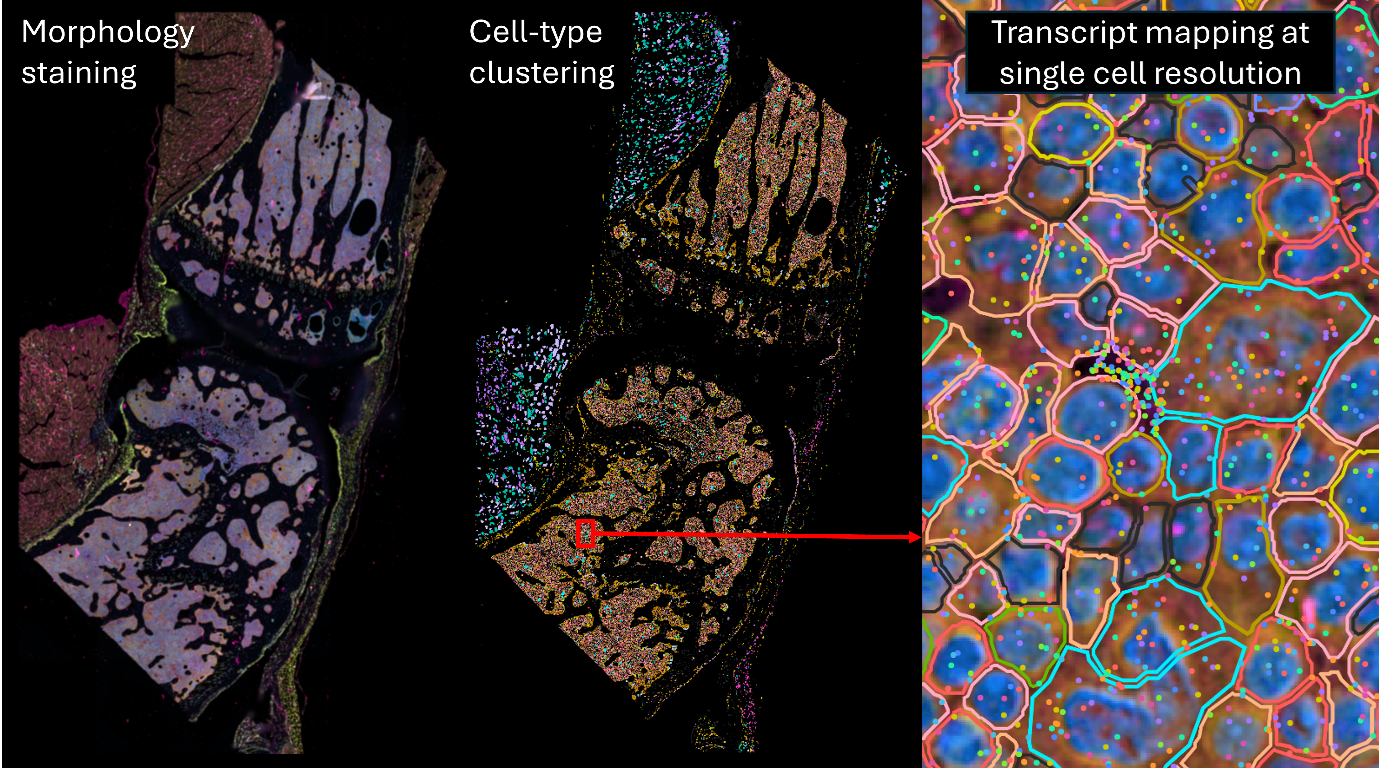
Single cell resolution tissue and transcript map of osteoarthritic mouse joint tissue generated with the Xenium platform. Image courtesy of Dr Sohel Julovi, Kidney Injury Group, WIMR.
Resolve cellular heterogeneity in biologically complex samples and targeted cell populations to classify cell type, state and function at the single cell level for the following applications:
Single cell RNAseq (whole transcriptome analysis)
CITEseq (single cell protein and gene expression)
Single cell TCR/BCR sequencing (clonal diversity profiling)
Single cell ATACseq (chromatin accessibility profiling)
It's best suited for deep characterisation of cell states and populations where combining molecular layers sharpens identity and reveals regulation that any single modality would miss.
Best for: Cell typing and composition profiling, generating cell atlases, biomarker discovery projects.
Single-cell multiomics Pipeline
Inclusions:
Cell isolation and barcoding using BD Rhapsody platform
Library preparation and sequencing
Antibody staining for protein and sample multiplexing (if required)
Combining multiple modalities from the same cells and applying QC, normalisation, integration, and annotation, enabling powerful differential, pathway, and cross-modality analyses.
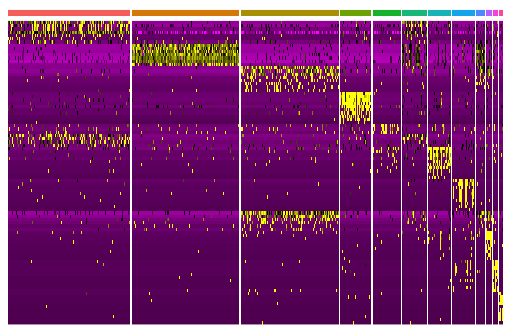
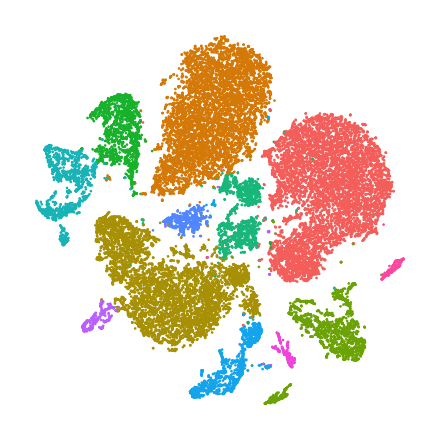
Cell populations identified from the small bowel of a patient suffering from Crohns disease based on whole transcriptome single cell signatures. Data courtesy of Dr. Kirstie Bertram, Dr. Erica Vine and Dr Tom O’Neil, Inflammatory Bowel Disease Group, WIMR.
Discuss your project with our specialists
For enquires about PrecisionGo Technologies and Pipelines:
For enquires about PrecisionGo Data and Digital Analytics capabilities:
“Communication was very responsive and top-notch. The team was very knowledgable about how small changes enabled my samples to be optimised for my project. The final outcome was even better than we imagined. A great experience all around.”
PrecisionGo Client